
Albanian-Owned Businesses in North Macedonia: From Scratch to Competing in Europe
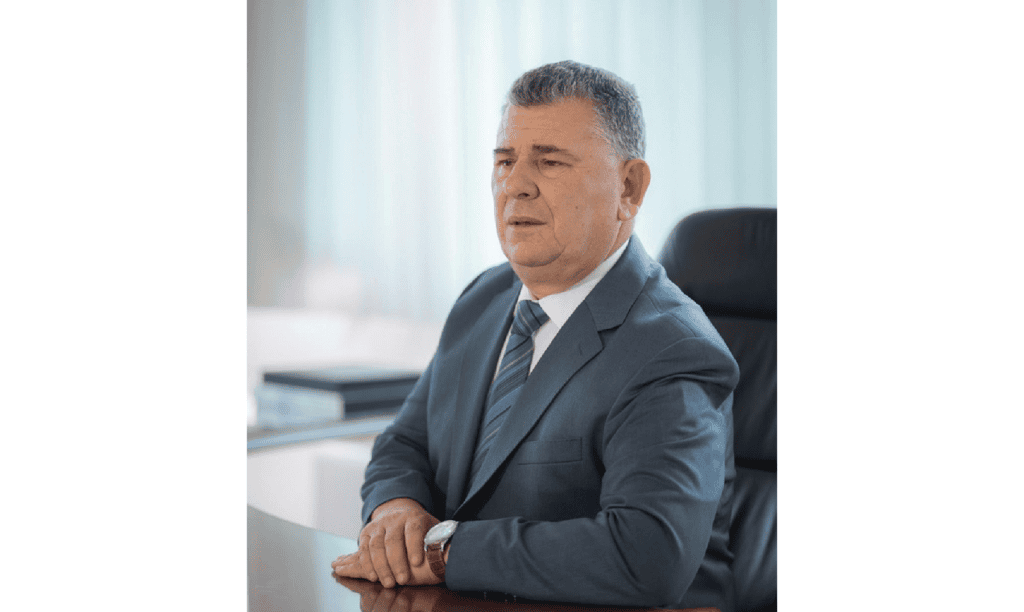


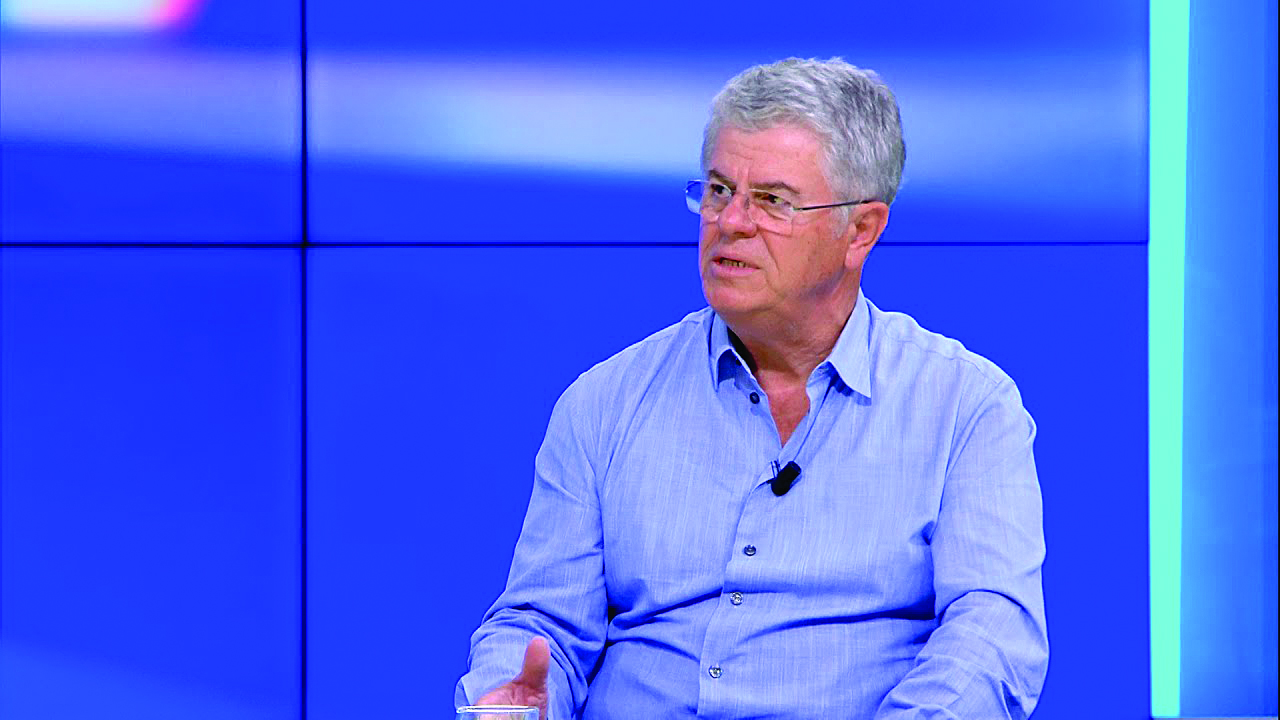
Interview with Xhemail Dauti, Entrepreneur in North Macedonia and Honorary President of the Economic Chamber of North-West Macedonia (ECNWM)
From a family business founded on the eve of Yugoslavia’s dissolution, Xhemail Dauti built a company with a regional presence. The Skopje-based entrepreneur argues that Albanian-owned businesses in North Macedonia, which he says were largely excluded from the privatization of socially owned enterprises, have become a significant economic force. However, he warns that current economic growth remains insufficient and that Western Balkan countries must overcome the barriers dividing their economies if they are to compete in Europe.
When Xhemail Dauti and his three brothers founded Dauti-Komerc on May 29, 1990, Yugoslavia still existed, but the economic system underpinning it was entering a period of fundamental transformation. The planned economy was giving way to market forces, while the privatization of socially owned enterprises would shape the structure of private capital in the successor states for decades to come.
For ethnic Albanians in North Macedonia, Dauti argues, this transition did not offer equal opportunities. In his view, the privatization model favored the continuity of existing enterprises, while Albanian entrepreneurs were largely left to build their businesses from scratch, relying primarily on trade, services and family investment. Dauti himself was among them.
His involvement, however, extended beyond running his own business. In 2004, he initiated the establishment of the Economic Chamber of North-West Macedonia (ECNWM), becoming its first president. Today, as head of Dauti-Komerc and Honorary President of the ECNWM, he remains an experienced voice in debates on economic policy, competitiveness and regional integration.
In this interview with Monitor, Dauti argues that Western Balkan economies have the potential to grow much faster but continue to be constrained by inadequate development policies and barriers between markets. In his view, the future of Albanian-owned businesses lies not only in strengthening individual companies but also in forming consortia, establishing joint ventures and pursuing investments aimed at European markets.
North Macedonia’s economy grew in 2025, but the country continues to face structural challenges. How do you assess its economic performance, and to what extent is this growth translating into improved living standards?
North Macedonia’s economy is not very different from those of other Western Balkan countries. We have recorded economic growth compared with the previous year, but I believe the pace remains insufficient to bring about meaningful improvements in people’s living standards.
When we discuss economic growth, we should not be satisfied simply because the indicators are positive. We need to ask whether that growth is creating new jobs, increasing purchasing power, improving productivity and making a tangible difference in people’s everyday lives.
I believe North Macedonia, like the other countries in the region, should pursue much more ambitious economic policies aimed at achieving double-digit GDP growth. This is an ambitious goal and certainly not an easy one to achieve, but I believe the region has comparative advantages that remain insufficiently exploited.
We have a favorable geographical location, natural resources, a tradition of trade, tourism potential and a private sector that has demonstrated its ability to adapt even under difficult circumstances.
The problem is not simply a lack of potential, but how effectively we make use of it. To accelerate development, we need bolder investment policies, support for productive sectors, better infrastructure and a public administration that responds to the needs of the economy.
Modest growth may preserve stability, but it is not enough to close the economic gap with European Union countries at the pace we need.
Which sectors are showing the greatest development potential, and where do you see the main challenges for businesses?
The sectors currently showing the strongest momentum are construction, trade, tourism, services and, to some extent, industry. These sectors have developed considerably and attracted private investment, creating jobs and contributing to economic activity.
However, we should not confuse growth in individual sectors with the full realization of a country’s economic potential.
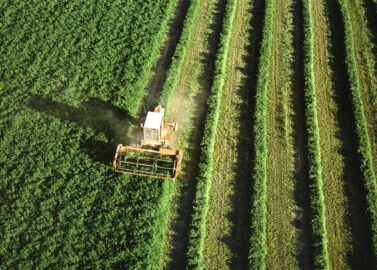
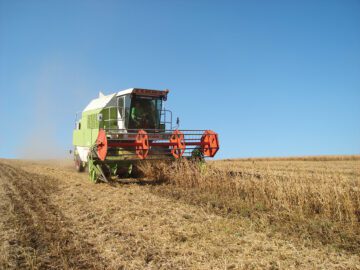
Agriculture and livestock farming offer a particularly telling example. North Macedonia has comparative advantages in both. Its natural conditions, agricultural traditions and geographical position provide opportunities to develop the production and export of agricultural and food products. Yet much of this potential remains untapped.
In my opinion, the main reason lies in inadequate development policies that have not been sufficiently aligned with contemporary international models and practices.
What we need is an approach that treats agriculture not merely as a traditional activity but as part of a modern industry. This means investing in technology, processing, storage, standardization, packaging and organized supply systems.
Producing fruit or vegetables is not enough. Businesses must also have the capacity to store, process, transport and sell their products in markets where they can achieve higher added value.
This is precisely where stronger links can be established between agriculture, manufacturing and trade.
You have been involved in the development of Albanian entrepreneurship since the beginning of the economic transition. How significant are Albanian-owned businesses in North Macedonia’s economy today, and how do you explain their development?
To understand the position of Albanian-owned businesses today, we need to go back to the early 1990s, when Macedonia gained independence from the former Yugoslavia and the privatization of socially owned enterprises began.
The vast majority of Albanian businesses were established as private enterprises from scratch, without inheriting the assets of socially owned companies that had operated under the previous system.
In my assessment, ethnic Albanians in North Macedonia were largely sidelined by the privatization model for socially owned enterprises. The process did not create equal opportunities for all citizens and influenced the structure of private capital that emerged after independence.
As a result, Albanian entrepreneurs relied primarily on family savings, hard work, commercial skills and individual initiative.
This was a more difficult path because businesses had to be built without an inherited industrial base or the economic infrastructure that some other enterprises had retained from the previous system.
Nevertheless, thanks to their entrepreneurial spirit and capabilities, Albanian-owned companies managed to grow and have become a significant force in North Macedonia’s economy.
According to analyses conducted by the Economic Chamber of North-West Macedonia, companies with Albanian owners are estimated to contribute more than 40% of GDP.
In 2018–2019, the ECNWM identified 6,354 Albanian-owned companies, employing anywhere from five to 1,500 people each. These figures illustrate the scale that Albanian entrepreneurship has reached.
Many established companies have recorded double-digit annual growth rates, demonstrating sustained business development.
For me, this transformation is particularly significant. We have moved from a phase of survival to one of consolidation and expansion.
In which sectors are these companies most present, and how has their role in the national economy changed?
The greatest presence of Albanian businesses is observed in construction, wholesale and retail trade, tourism and, increasingly, in manufacturing activities. This structure is not accidental. It is directly related to the way the economic transition developed. Albanian companies were mainly concentrated in sectors they could enter through new private investments, without depending on the continuity of privatized socially owned enterprises. Over time, many of them transformed from small family businesses into modern enterprises, with more developed organizational structures, distribution networks and investment capacities.
Another important change is their institutional organization. The Economic Chamber of North-West Macedonia (ECNWM) was established precisely to articulate the interests of this business community and to ensure that its voice would be heard in economic policymaking processes. Today, companies organized within the Chamber represent a significant segment of the private sector and contribute to debates on fiscal policies, investments, competition and economic development. However, I believe that the next phase must be even more ambitious. Albanian businesses need to invest more in manufacturing, technology, innovation and international expansion. They need to build management structures that enable them to grow beyond the traditional family business model. Today, being a successful company in the domestic market is not enough. You must have the capacity to compete beyond it.
The Transformation of Albanian Enterprises
The greatest presence of Albanian businesses is observed in construction, wholesale and retail trade, tourism and, increasingly, in manufacturing activities. This structure is not accidental. It is directly related to the way the economic transition developed. Albanian companies were mainly concentrated in sectors they could enter through new private investments, without depending on the continuity of privatized socially owned enterprises. Over time, many of them transformed from small family businesses into modern enterprises, with more developed organizational structures, distribution networks and investment capacities.
Economic relations between Albania and North Macedonia have developed, but investments do not appear to flow with the same intensity in both directions. How do you explain this asymmetry?
Interest among companies from Albania in investing in North Macedonia remains relatively low, even though our country offers a solid environment for business development. On the other hand, companies from North Macedonia have shown greater interest in investing and expanding their activities in Albania. This is related to the potential and attractiveness of the Albanian market, but also to the concrete opportunities offered by Albania’s economy. We have companies from North Macedonia that have invested in tourism, construction and, particularly, trade. Many products from North Macedonia are already present in the Albanian market. However, we do not see the same presence of Albanian products in our market. An important exception is fruit and vegetables imported from Albania, which have found a place in our supply networks. This asymmetry shows that there is still considerable room for developing trade and investment relations. Albania has a market with potential, a developing tourism sector and investment opportunities in several areas. North Macedonia, on the other hand, has a tradition in trade, distribution, industry and services. These advantages can complement one another. However, economic cooperation does not develop on its own simply because of geographical, linguistic or cultural proximity. Businesses need to get to know one another better, identify common interests and establish concrete partnerships. In my opinion, we should not limit ourselves solely to the exchange of goods.
The Potential for Cooperation
Albania has a market with potential, a developing tourism sector and investment opportunities in several areas. North Macedonia, on the other hand, has a tradition in trade, distribution, industry and services. These advantages can complement one another. However, economic cooperation does not develop on its own simply because of geographical, linguistic or cultural proximity. Businesses need to get to know one another better, identify common interests and establish concrete partnerships. In my opinion, we should not limit ourselves solely to the exchange of goods.
In which sectors do you see the most concrete opportunities for joint investment, and could Corridor VIII become a factor that transforms economic relations between the two countries?
The greatest potential remains in construction, trade, tourism and manufacturing. These are sectors where companies from both countries already have the capacities, experience and interest. So far, cooperation has not reached the level it could have achieved, considering geographical proximity and economic opportunities. Nevertheless, recently there have been positive developments towards intensifying cooperation, particularly through the establishment of stronger consortia, joint ventures and a coordinated approach to third-country markets. I consider this a very important development. When companies combine their capital, knowledge, experience and commercial networks, they can undertake larger investments and compete in markets where it would be much more difficult for them to succeed individually.
Corridor VIII could play a decisive role in this regard. Albania and North Macedonia lie along one of the most important transport corridors intended to connect the Adriatic Sea with the Black Sea. The development of this infrastructure project could create much better conditions for the movement of goods, capital and people, reducing transport costs and increasing business competitiveness. However, infrastructure should be viewed as an instrument of economic development, not merely as a construction project. If the corridor is completed and accompanied by more efficient border procedures, logistics centers and investment in manufacturing, it could change the way supply chains operate in the region. Albanian ports could serve as more important gateways connecting companies from North Macedonia with international markets, while manufacturing and trading capacities in North Macedonia could contribute to the development of joint distribution networks.
The Western Balkans aims to gradually integrate into the European Union’s single market. Are companies in the region prepared for this competition, and what role can the Berlin Process play?
The Berlin Process has made an important contribution to reducing barriers and creating conditions for more intensive economic cooperation among Western Balkan countries. However, we cannot say that all obstacles have been eliminated. Administrative, procedural and trade barriers still exist, making the movement of goods, services and capital more difficult. The project to establish the Common Regional Market represents a very important prospect for our economies. The reason is simple: companies in the region must prepare to compete in a much larger market, that of the European Union.
If we fail to create a functioning market among our countries, it will be even more difficult for us to face competition in the European market, which comprises approximately 500 million consumers. The Common Regional Market should serve as a preparatory stage in which our companies learn to operate in a larger economic area, with harmonized standards and more intense competition. This integration would create opportunities to expand production, increase exports and attract investment. For Albanian-owned companies, which are already present in several economies across the region, this represents an important opportunity for consolidation and expansion. However, we must be aware that economic integration does not automatically bring benefits.
Companies need to modernize, invest in technology, quality and management, and develop the capacity to compete in larger markets. In this process, cooperation between companies is just as important as cooperation between governments.
What concrete steps should the governments in Tirana and Skopje, as well as the chambers of commerce, take to turn economic cooperation from a political objective into a tangible reality for businesses?
First, we must understand that economic cooperation cannot be based solely on political declarations and formal agreements. It must produce concrete results for companies. Chambers of commerce and business organizations in both countries must remain continuously active in identifying investment opportunities, informing companies and establishing direct connections between entrepreneurs. This includes economic conferences, B2B meetings, roundtables, investment forums and permanent mechanisms for communication between companies. However, these activities must deliver measurable results. This means establishing partnerships, making investments and developing joint projects.
On the other hand, the governments in Skopje and Tirana have a direct responsibility to create a more favorable economic environment. Beyond the obligations arising from the Berlin Process, CEFTA, alignment with European standards and other international mechanisms, I believe both governments should undertake additional initiatives to facilitate economic relations.
First and foremost, tariff and non-tariff barriers that still hinder bilateral trade should be removed, in accordance with existing trade obligations. Procedures should be harmonized and, wherever possible, tax and customs policies should be aligned so that differences between the two systems do not create unnecessary obstacles for businesses.
There is also a need for broader mutual recognition of relevant documentation, certificates and administrative procedures, while respecting international standards and agreements.
A company exporting from North Macedonia to Albania, or vice versa, should not face procedures that unnecessarily increase its operating costs and the time required to conduct business.
I believe we should aim to create conditions in which the markets of Albania and North Macedonia, although legally separate, function economically as a much more integrated area. This would enable companies to plan larger investments, benefit from economies of scale and establish more competitive partnerships.
Naturally, such a model would be even more beneficial if implemented across the entire Western Balkans, as envisaged by the Berlin Process.
We need a market where capital, products, services and ideas can move with as few obstacles as possible. This is a shared economic interest that transcends political differences and national borders.
Ultimately, our markets are relatively small when they operate separately. By integrating them, we create opportunities for larger investments, more competitive companies and faster economic development.
Stronger Together
We need a market where capital, products, services and ideas can move with as few obstacles as possible. This is a shared economic interest that transcends political differences and national borders. Ultimately, our markets are relatively small when they operate separately. By integrating them, we create opportunities for larger investments, more competitive companies and faster economic development.
Click here to register for free and access the 2025 ranking of the largest companies in the Balkans:
Monitor Special Edition | Ranking the Largest Companies in the Western Balkans in 2025
Ky është artikull ekskluziv i Revistës Monitor, që gëzon të drejtën e autorësisë sipas Ligjit Nr. 35/2016, “Për të drejtat e autorit dhe të drejtat e lidhura me to”.
Artikulli mund të ripublikohet nga mediat e tjera vetëm duke cituar “Revista Monitor” shoqëruar me linkun e artikullit origjinal.