
Western Balkans: Turning EU Accession Momentum into Investment and Growth



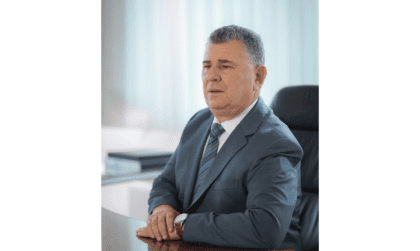
Interview with Alessandro de Concini, Head of the European Investment Bank (EIB) Representation in Albania
Albania has significant potential to develop its industrial sector, boost productivity and attract new manufacturing investment, capitalising on its proximity to the EU market and the opportunities created by the EU accession process. However, shifting from a growth model driven largely by construction, tourism and consumption towards a more competitive, export-oriented economy will require modern infrastructure, reliable energy, a skilled workforce and a predictable business environment.
In an interview with Monitor, Alessandro de Concini, Head of the European Investment Bank (EIB) Representation in Albania, highlights the opportunity for EU integration to become a powerful driver of the country’s economic transformation, provided that accession momentum translates into concrete investment and the development of higher value-added activities.
He emphasises that this challenge extends to the entire Western Balkans, where countries need to make better use of their potential to attract private capital and integrate into European value chains. Accelerating reforms, strengthening regional transport and energy links, and investing in technology and innovation are among the key priorities for narrowing the economic gap with the EU. De Concini underlines the EIB’s continued commitment to supporting Albania and the wider region through financing and technical assistance, helping translate EU accession into higher productivity and stronger economic competitiveness.
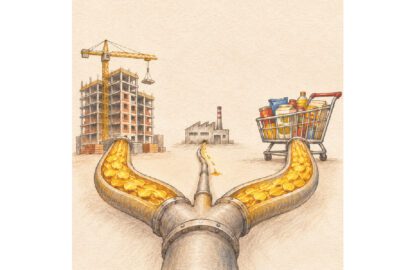
Albania is the only country in Europe where construction accounts for a larger share of GDP (12.6%) than industry (10.1%), compared with an industrial share of around 17–18% in other Western Balkan economies. What should Albania do to attract more investment in manufacturing and higher-value-added activities?
Albania has a real opportunity to rebalance its growth model towards industry, productivity and exports, and to integrate more deeply into European value chains. The potential and momentum are there, created by the EU accession process. Combined with Albania’s proximity to the EU market and the growing trend towards nearshoring, this creates a strong basis for attracting new investment.
The next step is to unlock that potential into higher-value production. That means creating a predictable and competitive investment environment, investing in skills, innovation and digitalisation, targeting investment in competitive, export-oriented industries and modernising infrastructure. Albania’s new industrial strategy provides a framework for this transformation and for addresing structural challenges, while the recent provisional closure of Chapter 20 on Enterprise and Industrial Policy is another important milestone. The ambition to strengthen the country’s productive base is welcome. Now, that ambition needs to be translated into concrete programmes, with clear implementation responsibilities, adequate financing and measurable targets.
This is where European financial institutions, particularly the the European Invesment Bank (EIB), can play an important role. As the EU bank, EIB is the investment engine for the EU accession, supporting Albania’s physical and economic integration to the EU. Since inception, EIB has invested more than €1 billion in Albania in key areas such as transport, digital, SMEs or climate adaptation.
Albania’s economic growth relies heavily on tourism, construction, consumption and public spending. How can the country shift towards a more productive, export-oriented growth model?
A growth model driven predominantly by domestic demand and non-tradable activities does not automatically generate the productivity gains, export capacity and technological upgrading needed for long-term convergence with the European Union. Albania has strong growth potential, but the challenge today is to build a more productive, diversified and export-oriented economy. From our perspective, three areas are particularly important: modern infrastructure and reliable energy, better access to finance for businesses, and investment in skills and innovation.
Albania does not need to abandon tourism, construction or domestic consumption. It needs to ensure that these sectors contribute more effectively to the development of a broader and more productive economy. It also means making tourism more sustainable, competitive and beneficial to local communities. For example, the EIB is supporting infrastructure upgrade in the north of Albania – Shkodër, Lezhë and Malësi e Madhe. The project will boost sustainable regional development, environmental protection, connectivity and tourism.
Serbia and North Macedonia have attracted more export-oriented manufacturing investment than Albania. What can Albania learn from their experience, and how could the EIB support industrial development?
Serbia and North Macedonia show that investment-friendly policies, modern industrial infrastructure, skilled labour and strong links to European supply chains can help attract export-oriented manufacturing investments. Their stronger trade links with the EU have also supported technology and knowledge transfer over time.
But the next challenge for all Western Balkan economies is to move further up the value chain, towards more productive, innovative and higher-value activities and make the whole region an attractive investment destination in the long term. While both countries have attracted significant export-oriented manufacturing investment in recent years, FDI inflows declined markedly in 2025.
Albania has an opportunity to build a stronger domestic industrial base. The accession momentum can help attract new investment, but this needs to be matched by better infrastructure, reliable energy and a predictable business environment. Local companies also need support to meet EU standards, innovate and become suppliers to European industries.
The EIB can help on both sides of this equation: financing the transport, energy and digital infrastructure that makes Albania more competitive, while expanding access to finance for SMEs and mid-caps. We are looking forward to participating at the second EU-Western Balkans investment conference taking place in Tirana in November, where we will speak about mobilising capital for innovation.
What are the main obstacles to deeper regional and EU market integration, and which investments or reforms would most effectively help Western Balkan businesses enter European value chains?
First, we need to strengthen cross-border connectivity. Transport, energy and digital networks should increasingly function as part of a single regional economic space, seamlessly connected to the EU. The World Bank estimates that around 26 million hours of truck drivers’ time are lost every year at Western Balkan border crossings. Even marginal improvements to trade flows would bring outsized benefits. Better connectivity means lower costs for businesses, easier trade and greater opportunities to become part of European value chains. Completing key railway corridors such as the EIB-supported Corridor VIII, Vore to Hani I Hotit and Durrës – Rrogozhina lines remain essential to improve connectivity and support market integration.
The energy sector is no different and regional integration is particularly important to enable electricity trading, more efficient use of storage and greater energy diversification and hence security.
Second, businesses need clear, predictable and increasingly harmonised rules. Legal certainty, transparent public procurement, efficient permitting, fair competition and consistent application of EU standards are all essential for attracting investment. At the same time, a stronger pipeline of mature, investment-ready projects is essential. The EIB can support this through financing as well as advisory expertise to help bring more projects to a bankable stage.
Third, we need to make it easier for people, businesses and ideas to flourish and develop across the region. This means strengthening vocational education and training, incentivising innovation, digitalising public services, lowering trade barriers and improving access to finance for innovative companies to help local businesses expand and compete. Ultimately, deeper regional integration should be a stepping stone to the EU Single Market, helping Western Balkan companies scale up and become stronger partners in European value chains.
What needs to improve in the Western Balkans’ investment climate to attract more private investment into productive and innovative sectors?
Private capital will follow good opportunities, which arguably you have plenty of in the region. However, it also needs the right conditions: a stable, predictable and transparent business environment, strong institutions, efficient permitting and land registration, transparent public procurement, reliable contract enforcement mechanisms, and stable regulatory frameworks aligned with EU standards. These are essential not only for attracting foreign investors, but also for encouraging local companies to invest, innovate and grow. Much progress has been achieved in these areas, but the process is not complete.
Second, we need to turn more investment opportunities into mature, bankable projects. In many cases, project preparation and implementation capacity can be increased. This is where the EIB and Team Europe can make a real difference. We can combine long-term financing, EU grants, advisory support, guarantees and risk-sharing instruments to prepare projects, reduce risks and mobilise private capital. The objective is not simply to finance more investments, but to crowd private capital into sectors that can transform the region’s economy, from clean energy and digitalisation to innovation and higher value-added industries.
This will be achieved also by deepening Albania’s capital markets and attracting new investors. Also here, EIB is supporting Albania in these efforts through its Greening Financial Systems advisory programme.
How prepared are Western Balkan SMEs for digitalisation and decarbonisation, and what support do they need to meet EU standards and remain competitive?
The trajectory is positive, but a significant competitiveness gap remains. Many Western Balkans SMEs still lag behind their EU peers in adopting green and digital technologies, while these capabilities are becoming condition for competing and integrating into the EU market.
For SMEs, the challenge is often not a lack of ambition, but limited access to finance, technology, skills and technical expertise. They need support to invest in energy-efficient assets, renewable energy, digital technologies and automation, while adapting their operations to increasingly demanding EU requirements.
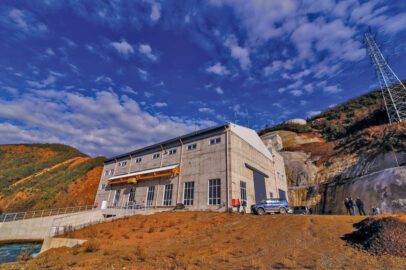
There are encouraging signs of digital transformation across the board, although depth of adoption remains uneven. On decarbonisation, the availability of reliable, affordable and clean energy will be critical, particularly as companies exporting to the EU comply with the Carbon Border Adjustment Mechanism (CBAM). Public investment is needed to support these efforts and further decarbonise the economy, through the modernisation of electricity grids, power distribution systems and other enabling infrastructure.
What financing instruments and advisory services can the EIB offer to help SMEs invest in technology, automation, energy efficiency and export capacity?
These are the areas where the EIB can make a difference. By combining financing with guarantees, risk-sharing instruments and technical assistance, and by partnering with local financial institutions, we can help SMEs undertake investments that might otherwise be beyond their reach.
For example, through our latest agreement with Intesa Sanpaolo Bank Albania, under the EIB Innovation and Green Transformation Facility, companies can access financing, EU grants and technical support for digitalisation, innovation and climate action projects.
Our financing is often complemented by hands-on support to help companies develop projects, reduce their environmental footprint and meet EU requirements. Tools such as the Decarbonisation Guide and the Green Eligibility Checker help businesses plan investments and assess their eligibility for green financing.
EIB research shows that firms benefiting from EIB intermediated lending in the Western Balkans recorded around 15% higher employment and 35% higher fixed assets compared with the period before receiving EIB financing.
What should be the main economic priorities for the Western Balkans over the next five years to accelerate productivity growth and convergence with the EU, and what role can the EIB play?
Over the next five years, the key challenge is to turn the momentum of EU accession into faster economic convergence and higher productivity. That requires progress on four fronts.
First, accelerating EU-related reforms and creating a predictable business environment that encourages investment. Second, strengthening connectivity, from transport links to modern energy grids and digital infrastructure.
Third, green transition and climate resilience must become drivers of economic competitiveness. Investing in renewable energy, energy efficiency and climate-resilient infrastructure can strengthen energy security, while making the region more attractive for investment, in a self-reinforcing cycle. And finally, we need to invest in people, skills and innovation, particularly the digital and technical capabilities businesses need to compete in a rapidly changing European economy.
EIB role is to help the Western Balkans close the investment and productivity gap with the EU and become more competitive, resilient and deeply integrated into the European economy. Looking ahead, EU membership will unlock access to substantial structural and cohesion funds. We are here to help Albania and other candidate countries maximise these opportunities by leveraging EU funding for strategic infrastructure projects, climate action and stronger private sector development.
Ky është artikull ekskluziv i Revistës Monitor, që gëzon të drejtën e autorësisë sipas Ligjit Nr. 35/2016, “Për të drejtat e autorit dhe të drejtat e lidhura me to”.
Artikulli mund të ripublikohet nga mediat e tjera vetëm duke cituar “Revista Monitor” shoqëruar me linkun e artikullit origjinal.